The Albatross
North Pacific · 38.0° N, 133.6° W
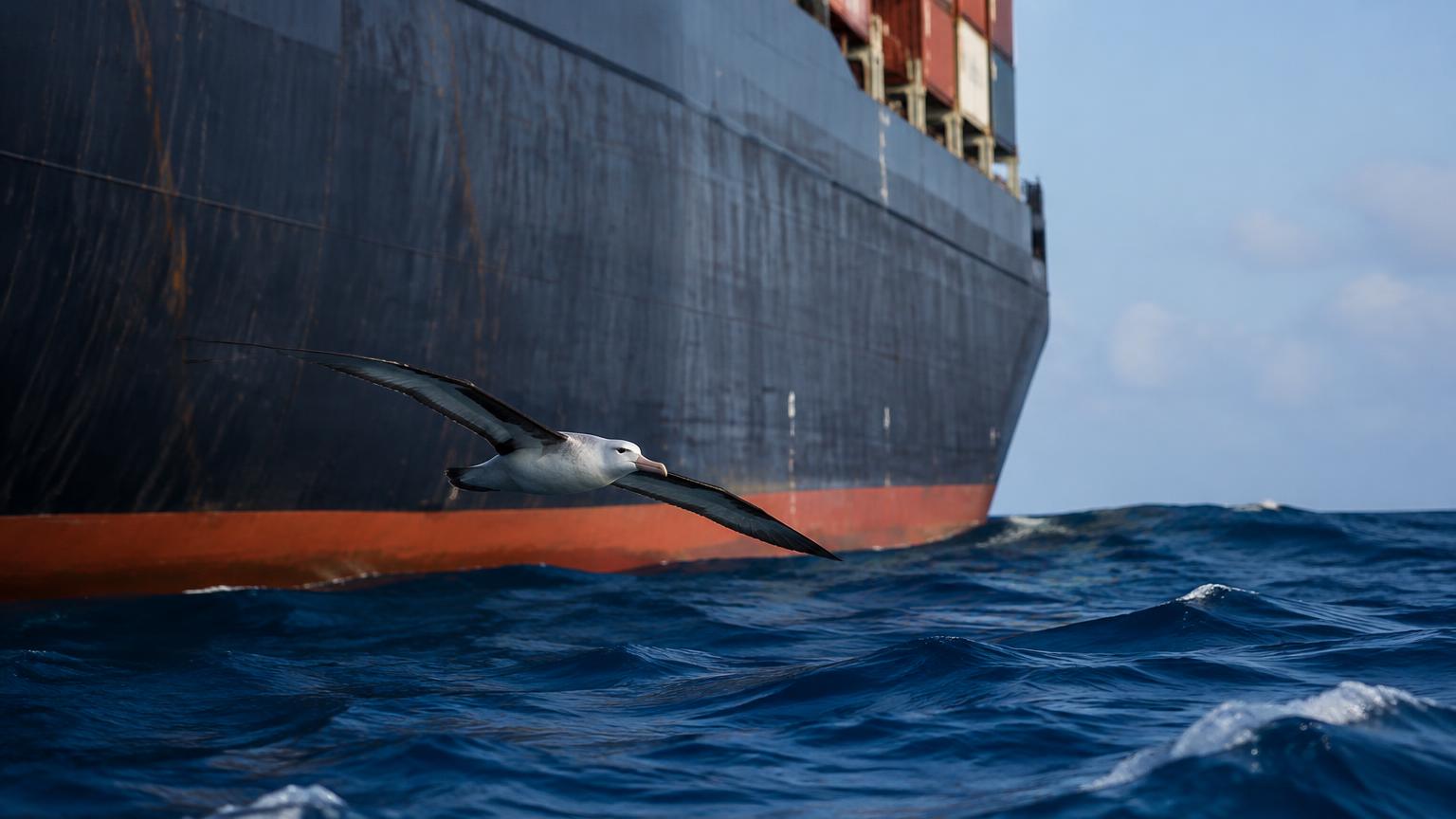
An albatross joined us this morning, and did not leave until dusk.
I saw it first from the walkway on my morning walk. A large white and dark bird, gliding low beside the hull, very close to the water. It did not flap. In the whole time I watched it, which was most of an hour, I do not think it flapped once. It simply tilted, a fraction, one way or another, and the air did everything else.
Yuki identifies it
At breakfast I described it to Yuki, who it turns out keeps a log of every seabird he has seen at sea, on a spreadsheet, naturally, with columns for date, position, species, behaviour, and "confidence".
"Laysan albatross," he said, before I had finished. "They breed on islands near Hawaii. They feed out here. They follow ships sometimes for the turbulence and the fish we disturb. Wingspan about two metres."
"How do you know it was a Laysan and not another kind?"
"White head, dark back, dark wings, and it is the most common one here in October," he said. "Confidence high." And he wrote it down.
The poem
I spent the afternoon in the ship's library, which has proven over these months to be one of the great discoveries of the voyage. It is two shelves and a box, and the box is where the good things are.
Somebody, at some point, left behind an old anthology of English poetry, and in it is The Rime of the Ancient Mariner, which I had not read since school. I sat in the window seat and read the whole thing aloud to myself, quietly, while the albatross went on gliding past the porthole outside. It was the most atmospheric reading experience of my life. Container slept on my feet throughout, unmoved by any of it.
If you have not read it recently, the short version is this: a sailor shoots an albatross that has been following his ship, and everything goes horribly wrong for everybody, for a very long time, in verse.
The rule
At dinner I mentioned that I had been reading Coleridge. Several of the crew, who are mostly not great readers of Romantic poetry, nonetheless knew exactly what I meant. The albatross, it turns out, is sacred at sea. You do not harm it. You do not speak badly of it. You certainly do not do anything to it that might end up in a poem.
Marco said his grandfather, a fisherman in Naples, believed every albatross was the soul of a drowned sailor. Daniel the cadet said in Cebu they say something similar. Big Kev said he did not believe in any of that, and then, when pressed, said he also would not personally be the one to annoy one.
Priya listened to all of this, and then turned to me and said, "One rule."
"Only one?"
"For you, about birds, one. Do not throw biscuits at it."
"I would never throw biscuits."
"You would never throw biscuits away," she said. "That is different. If you feel tempted to share, share with me."
Dusk
The albatross stayed until the light began to go. In the last of the sun, it rose once, high above the containers, wheeled over the bridge in a great wide circle, and then slid away south across the swell and was gone.
I watched until I could not see it. Yuki, on the deck below, was also watching, notebook in hand. He looked up at me and gave me a small, solemn nod. I nodded back. I think we were both a little sad.
I went back to my cabin and reread the last verse, about the man who loves all things both great and small. Then I opened the biscuit tin by its brass knob and ate one, alone, in honour of the albatross. I did not share it with anyone. I feel the bird would have understood.