Busan and the Important Cargo
Busan, South Korea · 35.0° N, 128.8° E
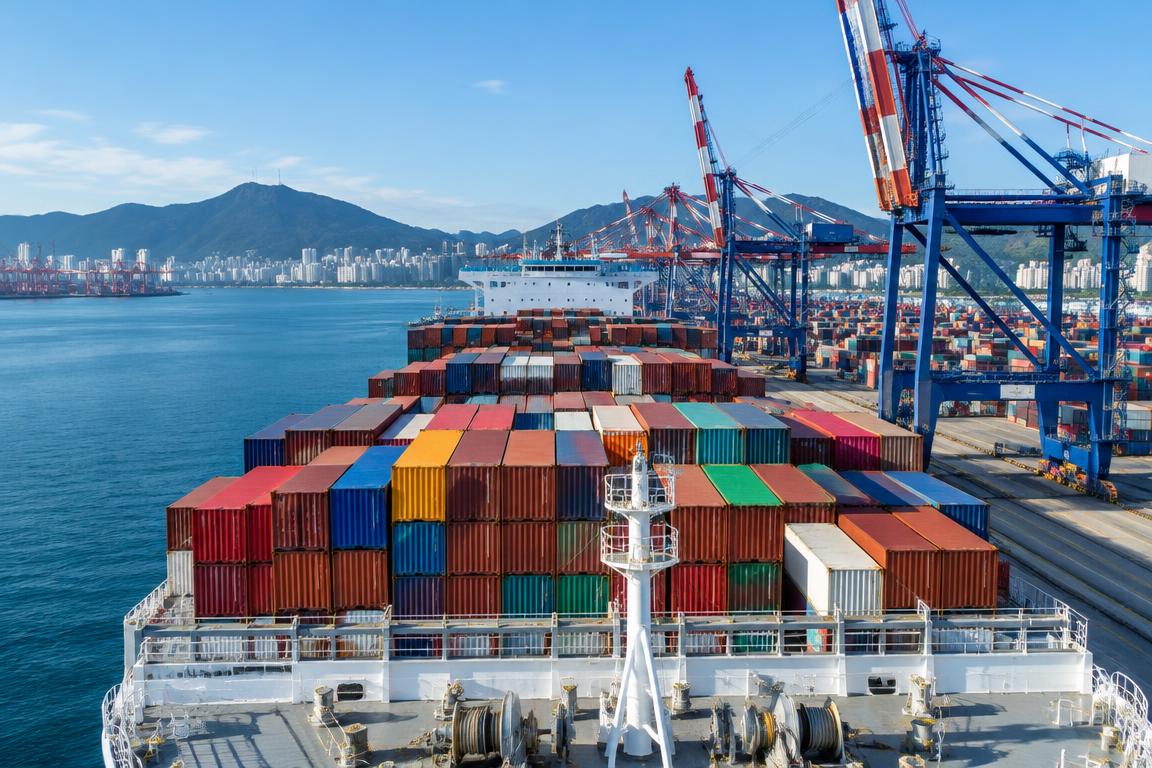
Busan appeared out of the morning haze as a collection of cranes so large they made our ship look briefly reasonable. This is not an easy thing to do. Four hundred metres of vessel usually wins any local argument about scale, but the terminal had clearly been waiting for us and had brought its own equipment.
We were alongside by breakfast. I watched from a permitted corner of the bridge while the pilot and officers discussed things in voices that did not rise above conversational. Outside, tugs performed a series of small, exact movements. Inside, I moved my coffee six inches to avoid being in the way. It was my principal contribution to the arrival.
The expedition
Marco helped arrange a short trip ashore once permission and transport were sorted. There was no wandering through a working container terminal, which had briefly featured in my romantic version of port life. Instead, there was a vehicle, a gate, a driver who knew where he was going, and me trying to look like someone who understood all of this.
I had intended to appreciate the city. I did appreciate the city. I also appreciated a shop with an entire section devoted to biscuits, which proved unexpectedly difficult to leave. Some were buttery, some contained sesame, and one packet suggested a level of chocolate ambition I felt obliged to investigate. I bought tea as well, largely to maintain the appearance of a balanced mission.
Back aboard, I arranged the new purchases on my desk alongside the surviving tins from Colombo, Singapore, and Hong Kong. It is becoming less a snack supply and more a very small museum with an unusually high turnover of exhibits.
Priya came past while I was transferring a few samples into a smaller tin for later. She stopped in the doorway, looked at the desk, and then looked at me.
"You have categories."
"Only broad ones."
"There are labels."
The labels are in my notebook, not on the biscuits, which I felt was an important distinction. She did not.
An inspection
She asked which had travelled furthest, which I would save until last, and which I would serve with coffee rather than tea. This was substantially more interest than anyone has ever shown in my biscuit collection, including me. I began answering with the enthusiasm of a man who has accidentally discovered an audience.
After several minutes she selected one sesame biscuit, considered it carefully, and said, "Tomorrow. Bring the tin. Early."
I asked how early.
She smiled in that small, dangerous way of hers. "You will manage."
Busan outside the porthole tonight, cranes still working, new supplies safely stowed. I appear to have been invited to a breakfast meeting whose sole agenda is biscuits. It is already my favourite kind.